About Kolhapur
The Kashi of the South — a city that has been a Shakti Peetha, a Maratha capital and a quiet engine of social reform for over a thousand years.
Where "Kolhapur" comes from
Legend tells of the demon Kolhasur, who terrorised the region until he was slain by Goddess Mahalaxmi. The place where she vanquished him became known as Kolhapura — the city of Kolha. The goddess stayed, and Kolhapur became one of the most important centres of Shakti worship in India.
Over the centuries the city gathered other names and honours. As a great seat of learning and devotion it came to be called Dakshin Kashi — the Kashi of the South — a title it wears with genuine weight: this is one of the six Shakti Peethas of Hindu tradition, where the eyes of Sati are said to have fallen when Shiva carried her body across the land.
A note on the legend
The Kolhasur story is a living part of local identity — you will hear it from temple priests, rickshaw drivers and grandmothers alike. Treat it as the city's own telling of itself, layered over a real and fascinating history.
Where the Sahyadris meet the plains
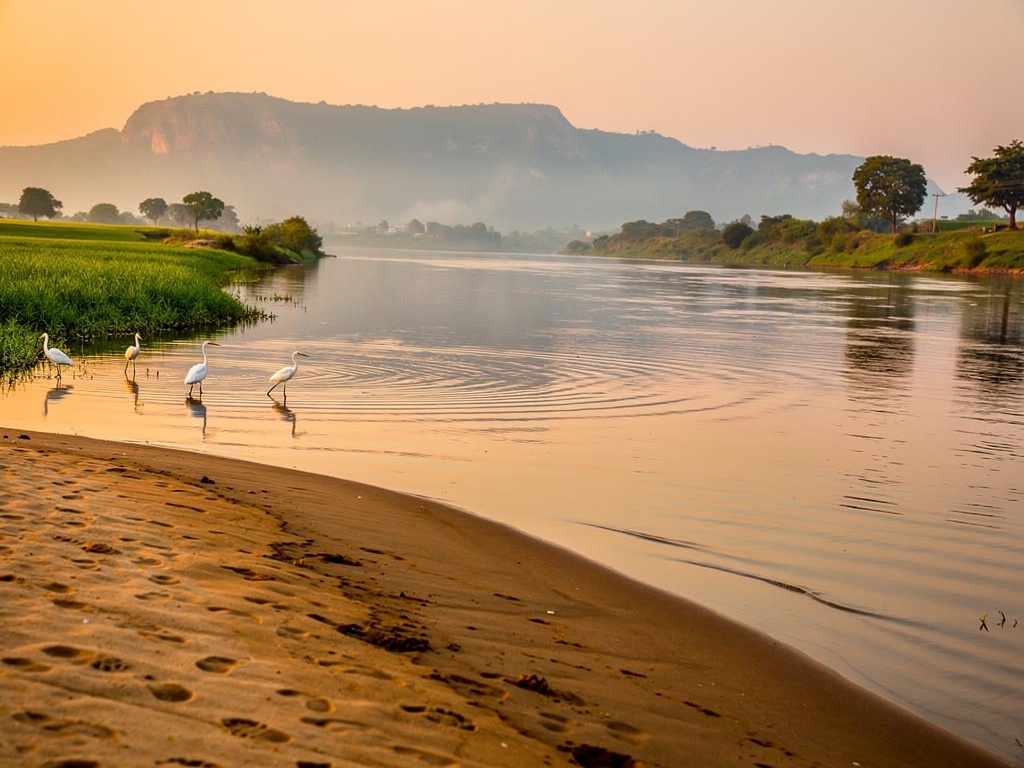
Kolhapur sits in the southwest corner of Maharashtra, at the base of the Western Ghats (Sahyadri), about 570 metres above sea level. The city is threaded by the Panchganga river — the "five rivers" — whose tributaries rise in the ghats that ring the district.
This geography is the secret to Kolhapur's character. The ghats catch the monsoon, giving the region its lush green, its waterfalls and its great forests — including Maharashtra's first wildlife sanctuary at Radhanagari. The plains below are rich black cotton soil, the land of sugarcane, jaggery and the cattle that made Kolhapur famous.
To the west, the ghat passes at Gaganbawada and Amba lead toward the Konkan coast. To the south, the land rolls toward Karnataka, which is why Kolhapur has always been a meeting point of Marathi and Kannada culture.
A thousand years in a few lines
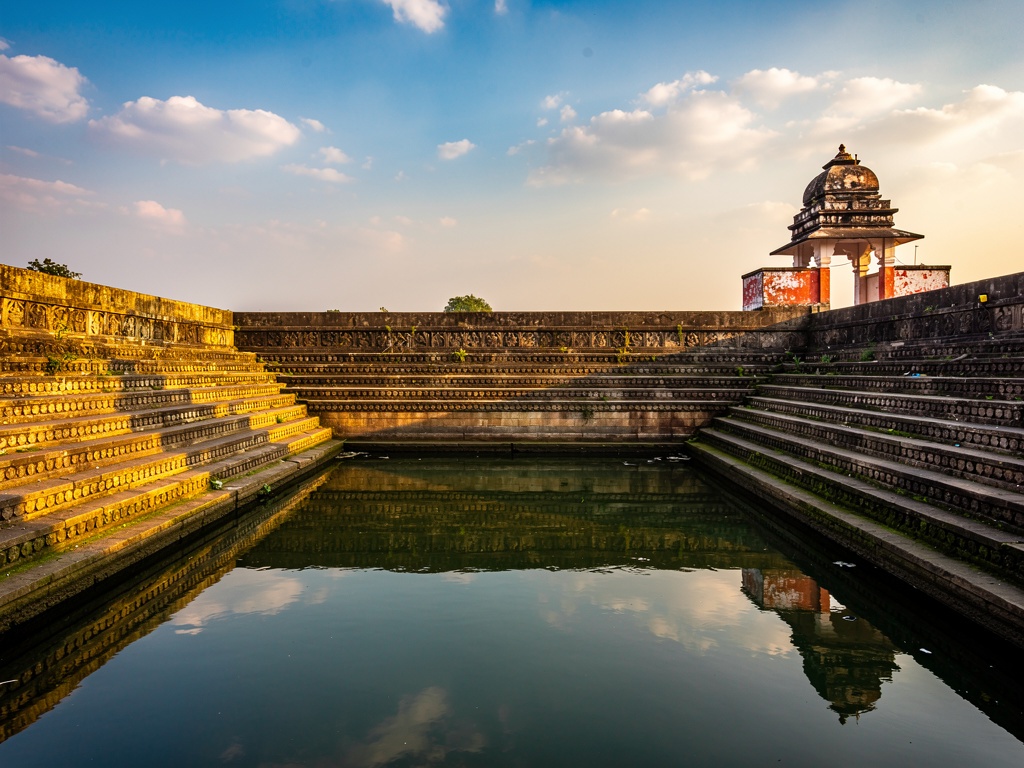
Kolhapur's story is unusually long and unusually well documented. The Shilahara dynasty ruled here from the 9th century, and it was under them that the great temples took shape. The Mahalaxmi Temple itself is thought to have origins in this period, and the region's architectural peak — the Kopeshwar Temple at Khidrapur — dates to the 12th century.
Then came the Marathas. Kolhapur became one of the four seats of the Maratha confederacy, and in 1707 a separate Kolhapur state was carved out under the Bhosale line. The city's defining moment came in the 20th century under Chhatrapati Shahu Maharaj, a ruler whose reforms — reservations for lower castes, free and compulsory education, and support for the non-Brahmin movement — made him a figure of national importance.
Today Kolhapur is a busy district headquarters and industrial city, but it has never lost the thread of its past. The wrestling pits of Khasbag still train champions, the chappal-makers still work leather by hand, and the goddess still receives the first rays of the sun at Kirnotsav.
Milestones
- 9th–12th c.Shilahara rule
Great temples built; Kopeshwar Temple carved at Khidrapur.
- 13th c.Yadavas & the Shakti tradition
Kolhapur's status as a Shakti Peetha grows.
- 17th c.Shivaji & Panhala
Shivaji uses Panhala Fort; the famous escape of 1660.
- 1707Kolhapur state founded
A separate Bhosale kingdom is established.
- 1894–1922Chhatrapati Shahu Maharaj
Progressive ruler; reservations, education and social reform.
- 1958Radhanagari Sanctuary
Maharashtra's first wildlife sanctuary is established.
Why travellers should care
Most Indian cities have one story. Kolhapur has several, and they are all still alive:
- Spiritual: a major Shakti Peetha with daily aarti, festivals and the rare Kirnotsav sun-ray phenomenon.
- Royal: a Maratha capital with forts, palaces and a reformer king whose legacy shaped modern India.
- Sensory: food that is genuinely, gloriously spicy, and crafts — chappals, saaj, jaggery — you can watch being made.
- Natural: the greenest corner of Maharashtra, with a UNESCO-linked Western Ghats sanctuary on the doorstep.
It is also a genuinely friendly city for travellers — compact, walkable in parts, and unpretentious. You come for the goddess and the forts; you stay for the misal and the sunset at Rankala.
Start planning your visit
Practical details — how to reach, when to come, where to stay — are all in the travel guide.
Open the travel guide